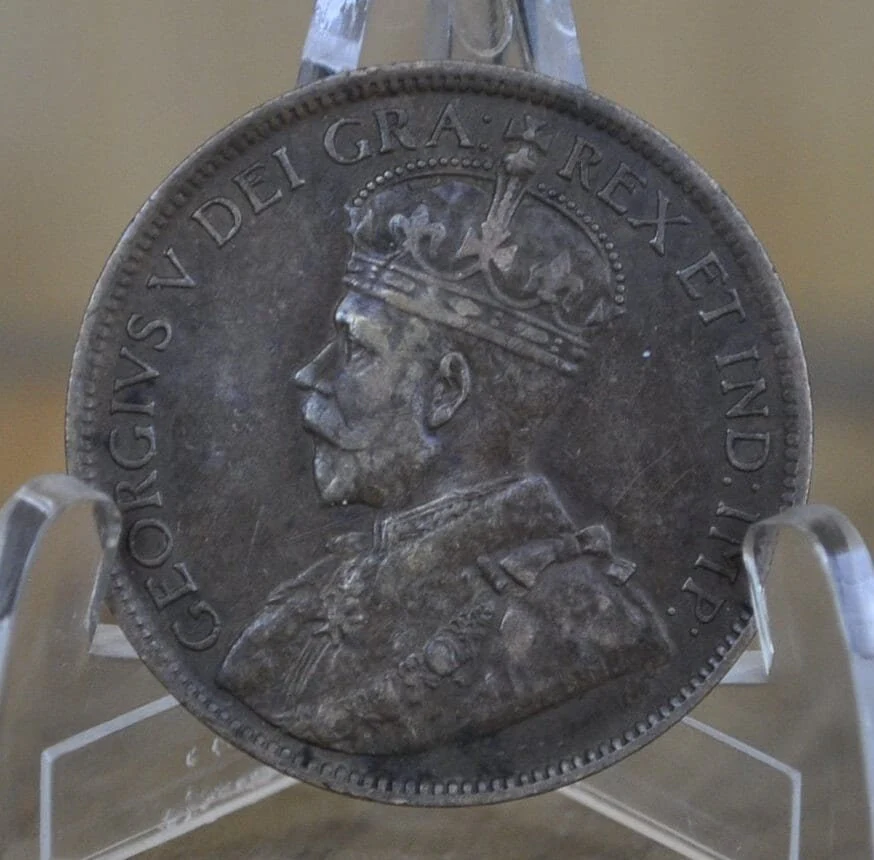
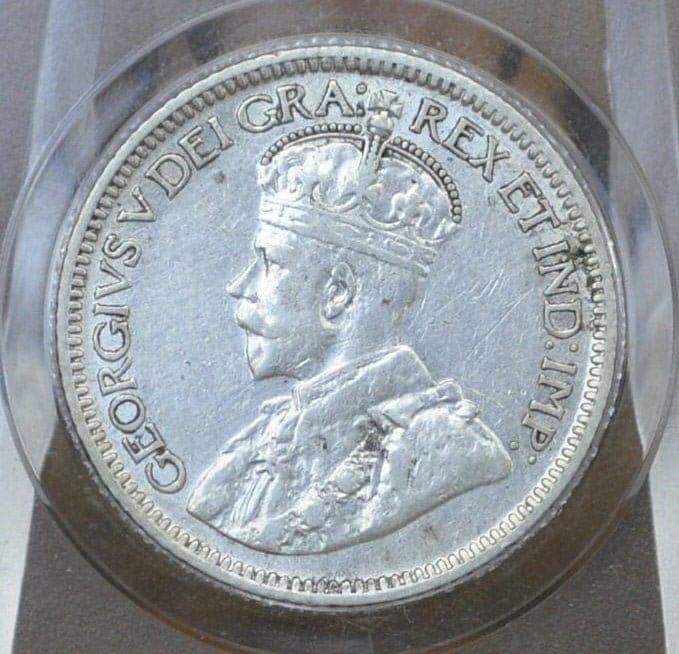
1916 Canadian Large Cent - VF-XF (Very to Extra Fine) Grade / Condition - King George V - One Cent Canada 1916 Large Cent - 1916 Large Cent
This listing is for one 1916 Canadian Large Cent, as pictured. Higher grade.
Canadian large cents of 1858–1920 were significantly larger than modern one-cent coins and even slightly larger than the modern 25¢ piece. After Confederation, these large cent coins were struck on the planchet of the British halfpenny and were roughly the same value. Pennies were issued sporadically in the third quarter of the 19th century. They were used in the Province of Canada, New Brunswick, and Nova Scotia upon Confederation in 1867.
New Brunswick and Nova Scotia had issued their own coinage prior to that date, with British Columbia, Prince Edward Island, and Newfoundland continuing to issue "pennies" until they joined Confederation. The coin was reduced in size to its current size to match the size of the American penny.
The first Canadian cent was minted in 1858 and had a diameter of 1 inch (25.4 mm) and a weight of 1⁄100 pound (4.54 g). These cents were originally issued to bring some kind of order to the Canadian monetary system, which, until 1858, relied on British coinage.
1916 Canadian Large Cent - VF (Very Fine) Grade / Condition - King George V - One Cent Canada 1916 Large Cent - 1916 Large Cent
Canadian large cents of 1858–1920 were significantly larger than modern one-cent coins and even slightly larger than the modern 25¢ piece. After Confederation, these large cent coins were struck on the planchet of the British halfpenny and were roughly the same value. Pennies were issued sporadically in the third quarter of the 19th century. They were used in the Province of Canada, New Brunswick, and Nova Scotia upon Confederation in 1867.
New Brunswick and Nova Scotia had issued their own coinage prior to that date, with British Columbia, Prince Edward Island, and Newfoundland continuing to issue "pennies" until they joined Confederation. The coin was reduced in size to its current size to match the size of the American penny.
The first Canadian cent was minted in 1858 and had a diameter of 1 inch (25.4 mm) and a weight of 1⁄100 pound (4.54 g). These cents were originally issued to bring some kind of order to the Canadian monetary system, which, until 1858, relied on British coinage.
1916 Canadian Large Cent - VF (Very Fine) Grade / Condition - King George V - One Cent Canada 1916 Large Cent - 1916 Large Cent
Product Information
Product Information
Shipping & Returns
Shipping & Returns

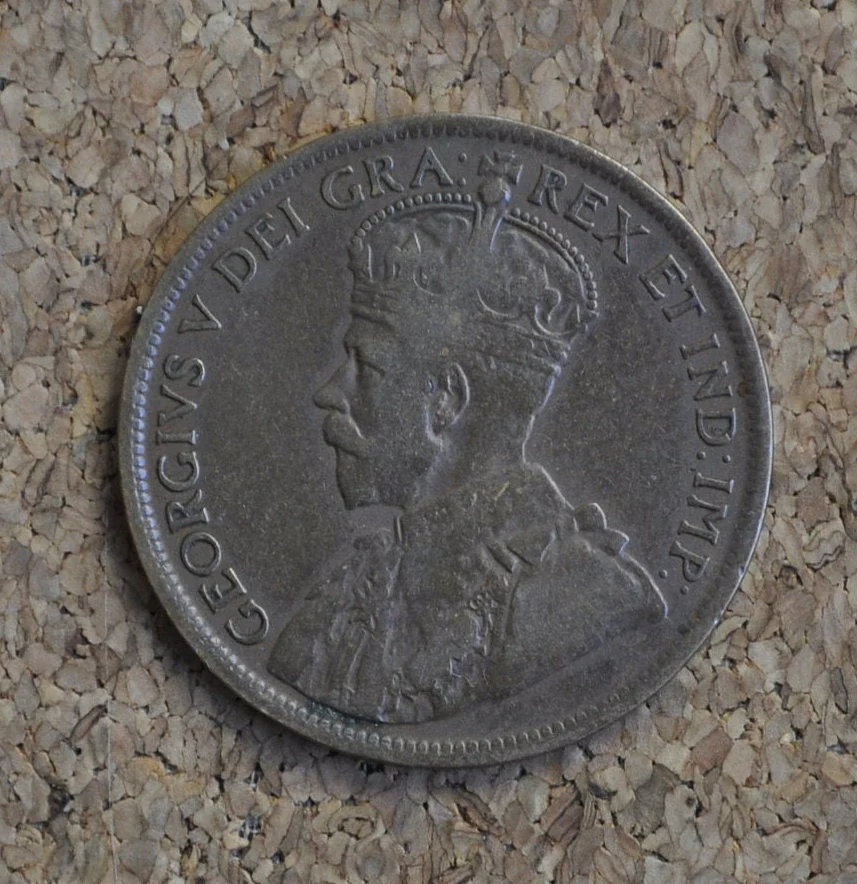
1916 Canadian Large Cent - VF-XF (Very to Extra Fine) Grade / Condition - King George V - One Cent Canada 1916 Large Cent - 1916 Large Cent
1916 Canadian Large Cent - VF-XF (Very to Extra Fine) Grade / Condition - King George V - One Cent Canada 1916 Large Cent - 1916 Large Cent
This listing is for one 1916 Canadian Large Cent, as pictured. Higher grade.
Canadian large cents of 1858–1920 were significantly larger than modern one-cent coins and even slightly larger than the modern 25¢ piece. After Confederation, these large cent coins were struck on the planchet of the British halfpenny and were roughly the same value. Pennies were issued sporadically in the third quarter of the 19th century. They were used in the Province of Canada, New Brunswick, and Nova Scotia upon Confederation in 1867.
New Brunswick and Nova Scotia had issued their own coinage prior to that date, with British Columbia, Prince Edward Island, and Newfoundland continuing to issue "pennies" until they joined Confederation. The coin was reduced in size to its current size to match the size of the American penny.
The first Canadian cent was minted in 1858 and had a diameter of 1 inch (25.4 mm) and a weight of 1⁄100 pound (4.54 g). These cents were originally issued to bring some kind of order to the Canadian monetary system, which, until 1858, relied on British coinage.
1916 Canadian Large Cent - VF (Very Fine) Grade / Condition - King George V - One Cent Canada 1916 Large Cent - 1916 Large Cent
Canadian large cents of 1858–1920 were significantly larger than modern one-cent coins and even slightly larger than the modern 25¢ piece. After Confederation, these large cent coins were struck on the planchet of the British halfpenny and were roughly the same value. Pennies were issued sporadically in the third quarter of the 19th century. They were used in the Province of Canada, New Brunswick, and Nova Scotia upon Confederation in 1867.
New Brunswick and Nova Scotia had issued their own coinage prior to that date, with British Columbia, Prince Edward Island, and Newfoundland continuing to issue "pennies" until they joined Confederation. The coin was reduced in size to its current size to match the size of the American penny.
The first Canadian cent was minted in 1858 and had a diameter of 1 inch (25.4 mm) and a weight of 1⁄100 pound (4.54 g). These cents were originally issued to bring some kind of order to the Canadian monetary system, which, until 1858, relied on British coinage.
1916 Canadian Large Cent - VF (Very Fine) Grade / Condition - King George V - One Cent Canada 1916 Large Cent - 1916 Large Cent
$1.92
Original: $5.49
-65%1916 Canadian Large Cent - VF-XF (Very to Extra Fine) Grade / Condition - King George V - One Cent Canada 1916 Large Cent - 1916 Large Cent—
$5.49
$1.92Product Information
Product Information
Shipping & Returns
Shipping & Returns
Description
This listing is for one 1916 Canadian Large Cent, as pictured. Higher grade.
Canadian large cents of 1858–1920 were significantly larger than modern one-cent coins and even slightly larger than the modern 25¢ piece. After Confederation, these large cent coins were struck on the planchet of the British halfpenny and were roughly the same value. Pennies were issued sporadically in the third quarter of the 19th century. They were used in the Province of Canada, New Brunswick, and Nova Scotia upon Confederation in 1867.
New Brunswick and Nova Scotia had issued their own coinage prior to that date, with British Columbia, Prince Edward Island, and Newfoundland continuing to issue "pennies" until they joined Confederation. The coin was reduced in size to its current size to match the size of the American penny.
The first Canadian cent was minted in 1858 and had a diameter of 1 inch (25.4 mm) and a weight of 1⁄100 pound (4.54 g). These cents were originally issued to bring some kind of order to the Canadian monetary system, which, until 1858, relied on British coinage.
1916 Canadian Large Cent - VF (Very Fine) Grade / Condition - King George V - One Cent Canada 1916 Large Cent - 1916 Large Cent
Canadian large cents of 1858–1920 were significantly larger than modern one-cent coins and even slightly larger than the modern 25¢ piece. After Confederation, these large cent coins were struck on the planchet of the British halfpenny and were roughly the same value. Pennies were issued sporadically in the third quarter of the 19th century. They were used in the Province of Canada, New Brunswick, and Nova Scotia upon Confederation in 1867.
New Brunswick and Nova Scotia had issued their own coinage prior to that date, with British Columbia, Prince Edward Island, and Newfoundland continuing to issue "pennies" until they joined Confederation. The coin was reduced in size to its current size to match the size of the American penny.
The first Canadian cent was minted in 1858 and had a diameter of 1 inch (25.4 mm) and a weight of 1⁄100 pound (4.54 g). These cents were originally issued to bring some kind of order to the Canadian monetary system, which, until 1858, relied on British coinage.
1916 Canadian Large Cent - VF (Very Fine) Grade / Condition - King George V - One Cent Canada 1916 Large Cent - 1916 Large Cent