1814 Capped Bust Large Cent - G-VG (Good/Very) Details - Great Type Coin - US Large Cent 1814 One Cent US - Great Type Coin
This listing is for the photographed 1814 Large Cent. Great type coin. Good details.
The United States large cent was a coin with a face value of 1/100 of a United States dollar. Its nominal diameter was 11⁄8 inch (28.57 mm). The first official mintage of the large cent was in 1793, and its production continued until 1857, when it was officially replaced by the modern-size one-cent coin (commonly called the penny).
Large cents were made of nearly pure copper, or copper as pure as it emerged from smelting, without any deliberate addition of other metals (such as occurs in bronze).
Product Information
Product Information
Shipping & Returns
Shipping & Returns

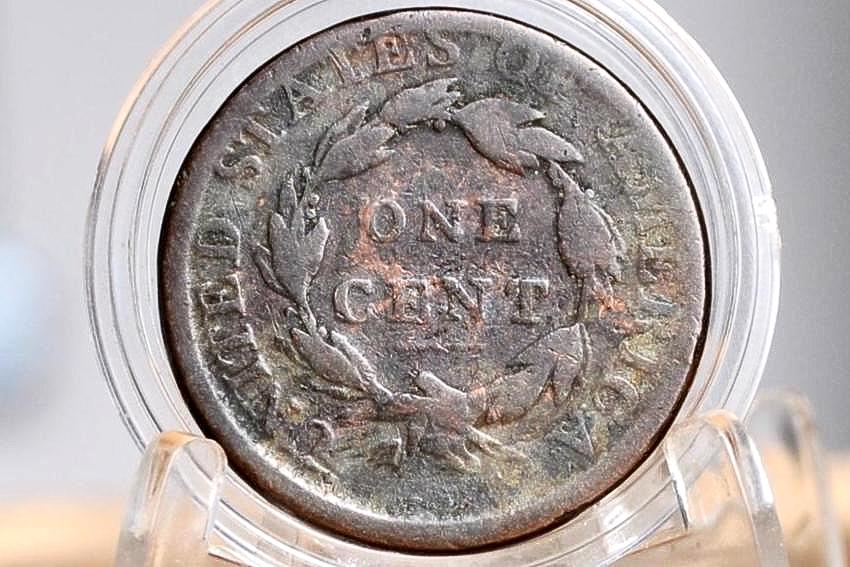
1814 Capped Bust Large Cent - G-VG (Good/Very) Details - Great Type Coin - US Large Cent 1814 One Cent US - Great Type Coin
1814 Capped Bust Large Cent - G-VG (Good/Very) Details - Great Type Coin - US Large Cent 1814 One Cent US - Great Type Coin
This listing is for the photographed 1814 Large Cent. Great type coin. Good details.
The United States large cent was a coin with a face value of 1/100 of a United States dollar. Its nominal diameter was 11⁄8 inch (28.57 mm). The first official mintage of the large cent was in 1793, and its production continued until 1857, when it was officially replaced by the modern-size one-cent coin (commonly called the penny).
Large cents were made of nearly pure copper, or copper as pure as it emerged from smelting, without any deliberate addition of other metals (such as occurs in bronze).
Original: $108.00
-65%$108.00
$37.80Product Information
Product Information
Shipping & Returns
Shipping & Returns
Description
This listing is for the photographed 1814 Large Cent. Great type coin. Good details.
The United States large cent was a coin with a face value of 1/100 of a United States dollar. Its nominal diameter was 11⁄8 inch (28.57 mm). The first official mintage of the large cent was in 1793, and its production continued until 1857, when it was officially replaced by the modern-size one-cent coin (commonly called the penny).
Large cents were made of nearly pure copper, or copper as pure as it emerged from smelting, without any deliberate addition of other metals (such as occurs in bronze).


